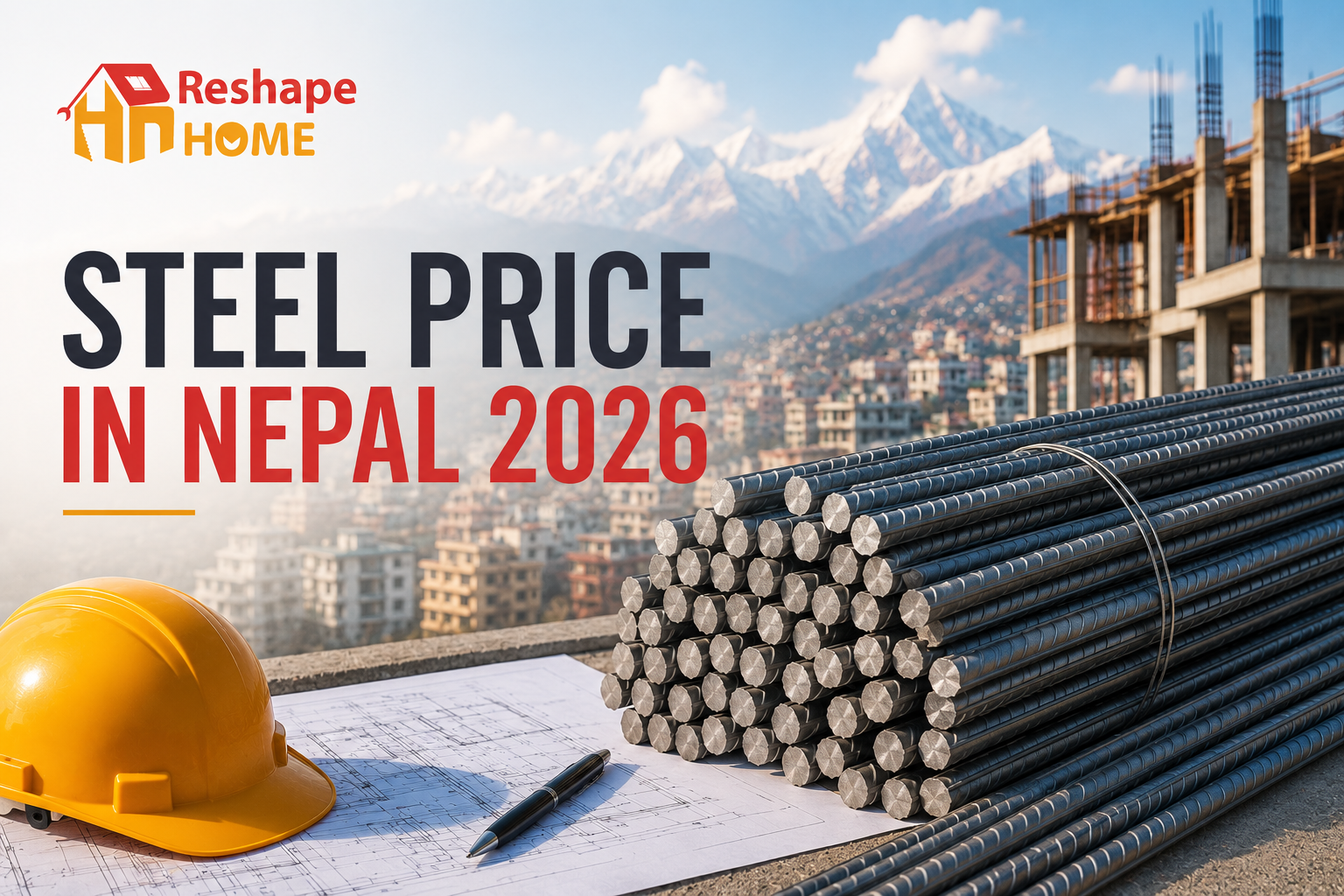
Whether you are building a new home, planning to construct an additional floor, doing home renovation, or remodeling, the most common question that arises for every homeowner in Nepal is, what is the steel price in Nepal? Understanding the current steel price in Nepal helps you plan your budget before construction even begins. We aim to present the rod/rebar price in Nepal for different sizes, grades, and brands of steel in this blog. We will also help you understand the difference between various steel brands. We will share the latest info on standard sizes, steel price per kg/ton, and much more.
This buying guide will be helpful for you if you are a homeowner, builder, or a first-time buyer searching for steel price rates to finalize the construction budget. The team at Reshape Home has been procuring steel and other construction materials for renovation and fabrication works in Kathmandu for different construction projects. Hence, we have prepared this informative blog based on our research, experience, and latest market rates.
Steel/TMT Bar Overview & Why It Is Necessary
Sariya or TMT bars are the main components of any RCC structure or building that can withstand natural forces like earthquakes. Steel bars are crucial for the residential, commercial, and industrial construction sector. It comprises a significant proportion of the total construction budget. Therefore, the steel price plays a vital role in finalizing the construction budget. The steel price in Nepal depends on the brand, grade, diameter of the rod, exchange rate, and demand and supply. It is one of the most critical construction materials whose rate must be considered while shortlisting construction work. This is why keeping track of the steel price in Nepal should be a regular part of your project planning, not a one-time check.
Standard Bar Sizes in Nepal
While buying any steel bar, it is essential to know the appropriate size that suits your construction type. Knowing these sizes also helps you compare the steel price in Nepal more accurately, since cost varies significantly by diameter. As per the expert consultation, the following are the standard sizes and their applications:
- 8mm and 10mm – mostly used for stirrups and other reinforcement bars
- 12mm and 16mm – ideal for residential buildings and apartments
- 20mm – suitable for heavy structural works like columns and beams
- 25mm and 32mm – fit for commercial buildings and other mega projects
Once you have identified the size of steel bars for your project based on the recommendation of a civil engineer, you can calculate the required amount based on the square feet of the construction. It will help you determine the steel price depending on the weight of a steel bar per meter, per kg, or per ton, instead of considering the average price of all sizes.
Steel Price in Nepal 2026: Estimated Price List
Here’s a simple, easy-to-understand price guide for TMT steel bars in Nepal. These figures are typical market estimates based on recent supplier data and industry reports, not fixed prices.
| Rod Diameter | Approx. Price Range (per kg) |
| 8mm | Rs. 90-120 |
| 10mm | Rs. 88-118 |
| 12mm | Rs. 85-112 |
| 16mm | Rs. 85-110 |
| 20mm | Rs. 85-110 |
| 25mm | Rs. 95-120 |
| 32mm | Rs. 95-120 |
As shown above, the steel price in Nepal varies by rod diameter, so always check the exact size you need before buying.
Note: Steel prices in Nepal change often, mainly due to exchange rate shifts and import costs, since a large part of the raw material is imported. Always confirm the current rate with your supplier before buying.
For people who buy steel in bulk, like contractors, steel is often priced per ton. As of mid-2026, Grade 50 steel costs around Rs. 85,000 – 95,000 per ton. Steel prices are estimates and may change over time.
Best Time of Year to Buy Steel in Nepal
The steel price in Nepal does not stay the same all year round. It goes up and down depending on the time of year. So, if you buy steel at the perfect time, you can save some money.
Here is what normally happens:
- During the monsoon season (June to September)
There is not much construction work because of the rain. Not many people are buying steel at this time so the price of steel usually comes down a bit. If your project is not urgent, this can be a time to buy steel.
- After the monsoon season (October to December)
This is when construction work starts again. A lot of people start buying steel and other materials at the time so the demand for steel goes up and the price of steel usually goes up too.
- During the peak building season (January to May)
This is usually the busiest time for construction in Nepal. The demand for steel is high so the price of steel tends to stay high during these months. Buying steel in Nepal during this time can be expensive.
Steel Grades and Brands Explained
Here’s a breakdown of the different grades and brands that influence the steel price in Nepal today.
1. Fe 500 Grade
This is the grade of steel that people use a lot in Nepal for building homes. It offers good strength at a relatively affordable price.
Approx. price: Rs. 85–100 per kg
2. Fe 500D Grade
The Fe 500D Grade is a little better than the Fe 500 Grade. It can stretch more and it is easier to weld. This is good for homes in areas where earthquakes happen a lot in Nepal.
Approx. price: Rs. 90–112 per kg
3. Panchakanya Steel
Panchakanya Steel is an old company in Nepal. They make steel and they have a lot of dealers from Kathmandu to Nepalgunj.
Approx. price: Rs. 80–95 per kg (Grade 40 or Grade 50/Fe500, depending on diameter)
4. Jagdamba Steel
Jagdamba Steel is the largest steel factory in Nepal. They make a lot of steel every day. They are good at making steel at low cost and they have a strong brand in Nepal.
5. Ambe Steel
A lot of people know about Ambe Steel in Nepal. They have dealers in cities like Kathmandu, Pokhara and Chitwan. This helps keep the price of steel stable.
6. Premier Steel
Premier Steel sells the Fe 500D Grade as a product. It is good for buildings that need to be strong against earthquakes.
Reshape Home chooses suppliers to make sure they get real and certified steel for every project. They do not just choose the supplier with the lowest price.
Fe 500 vs Fe 500D: Which Should You Choose?
Many builders compare the Fe 500 and the Fe 500D when they are planning construction.
- Fe 500: A great choice because it does not cost too much, and it has good tensile strength. It is suitable for low-rise residential work.
- Fe 500D: Costs a little more, but it is better because it has good ductility and weldability. It performs better under stress.
Either way, comparing the steel price in Nepal for both grades before deciding will help you stay within budget. For a country like Nepal that has a lot of earthquakes, Fe 500D is a choice for structural and load-bearing work in the long term. This is true even though it costs a little more per kilogram.
How to Estimate and Buy Steel in Nepal: A Complete Guide
Buying steel in Nepal is easy if you follow some steps. Here is what you need to do:
1. Get a structural engineer’s estimate
This is important because steel requirements depend on your building’s design, number of floors, soil condition and load calculations. Don’t try to estimate this yourself for a construction project. A structural engineer knows what they are doing.
2. Understand typical quantity needs
For example, a standard two-storey RCC house in Nepal usually needs around 5,000 to 8,000 kg of steel. This depends on the design and specifications.
3. Calculate approximate cost
For example, if you need 6,000 kg of steel and the price is Rs. 95 per kg, then the total cost is Rs. 5,70,000. This is illustrative. Always use your engineer’s quantity estimate.
4. Choose the grade of steel
You can choose between Fe 500 and Fe 500D steel. This depends on your budget and what your engineer recommends.
5. Compare prices with suppliers
Get at least 2-3 quotations from different dealers before you decide.
6. Check if the steel is authentic
Good quality steel rods have the brand name, grade (Fe 500 or Fe 500D) and NS mark on them.
7. Confirm the delivery and transportation costs
If the steel delivery is late, it can delay your construction project.
8. Negotiate for orders
If you order 10 tons or more of steel, you can get a discount from distributors.
By following these steps, you can properly budget quality-certified steel and get real value for your money on your construction or renovation project. Buying steel in Nepal can be straightforward if you do it right.
Common Mistakes to Avoid When Buying Steel
- Don’t go for the cheapest steel, it might cost you more in repairs later.
- Always look for the NS mark on the steel as it’s a must.
- Make sure to weigh the rods. A 12mm, 12m–long rod should weigh around 10.66 kg. If it’s lighter than that, it could be fake or low-quality steel.
- Try to buy steel during the monsoon season as the steel prices usually drop when construction work slows down.
- Get quotations from at least 2-3 dealers before making a purchase. You’d be surprised how much steel rates can vary by several rupees per kg.
- Ignoring recent steel price in Nepal trends before negotiating with a dealer.
Questions to Ask Dealer Before Buying
Before you finalize any steel order, take a minute to ask your dealer some questions. This can save you from problems later and help you understand what you’re paying for.
Here are some good questions to ask:
- What brand and grade is this steel? Don’t just accept “good quality steel” as an answer. Ask for the brand name and whether it’s Fe 500 or Fe 500D steel.
- Does the price include VAT? Some dealers quote a price without VAT. You find out later when the bill comes. Always confirm this upfront with your dealer.
- Is the delivery extra? Transportation charges can add to your cost so it’s better to know before you agree on a price for the steel.
- Can I see the NS mark on the rod? A trustworthy dealer won’t mind showing you this. If they avoid the question, that’s a warning sign about the steel quality.
- What happens if the steel is damaged or short in weight when it arrives? Ask about their return or replacement policy before you pay for the steel not after.
- Can I get a discount for a bulk order? It never hurts to ask, especially if you’re buying 5 tons or more of steel.
- How soon can you deliver the steel? If your project is on a schedule, confirm delivery timing clearly so it doesn’t hold up your construction work with the steel.
Asking these questions doesn’t take long. It can save you money, time and stress later in your project. A good honest dealer will be happy to answer all of them.
Steel Price Compared to Other Construction Materials
Steel is just one part of your total construction cost, alongside cement, sand, aggregate, and bricks. For example, our guides on cement price in Nepal and brick price in Nepal can help you build a more complete picture of your total material budget before you start. A small saving of even Rs. 10 per kg on steel can add up to lakhs of rupees in savings across a full house construction project.
Conclusion
To begin with, understanding the steel price in Nepal, rod sizes, grades, and trusted brands is imperative before starting any construction or renovation project. Whether you choose Fe 500, Fe 500D, or a specific brand like Panchakanya, Jagdamba, or Ambe, this guide helps you plan efficiently and avoid costly mistakes.
If you’re planning a renovation or fabrication project and want help sourcing quality materials at fair prices, Reshape Home’s renovation and fabrication services team is here to help — from material planning to complete project execution.
Frequently Asked Questions (FAQs)
1. What is the current steel price in Nepal?
Steel/TMT bars are currently priced between Rs. 85 and Rs. 120 per kg, depending upon the brand, diameter, and grade. This range reflects the current steel price in Nepal across most major cities.
2. What is the price of 1 ton of steel in Nepal?
The grade 50 steel (Fe 500) costs between Rs. 85,000 and Rs. 95,000 in Nepal for a ton. The amount does not include the price of value-added tax and delivery charges
3. Is the steel price fixed in Nepal?
Unfortunately, the steel price in Nepal is never fixed. The value keeps on fluctuating depending upon various factors such as currency rates, import duties, and seasonal variations. It is advisable to buy the construction material only after checking with local sellers.
4. What is the best steel brand in Nepal?
Panchakanya, Jagdamba, Ambe, and Premier are a few well-known steel brands in Nepal that are considered to be the best. These are among the most trusted, quality-focused brands in the Nepali market.
5. Should I buy a Fe 500 or a Fe 500D?
Fe 500D has superior weldability as compared to Fe 500. It is the best option for areas vulnerable to earthquakes. However, it is also a bit more expensive than the ordinary ones.
6. Does the dealer give a discount on bulk sales of steel?
Yes, bulk orders of 10 tons or more often qualify for a negotiated discount when purchased directly from an authorized distributor.
More Services


Recent Posts
-

Common Plumbing Problems in Nepal: Causes, Safe Fixes, and When to Call a Plumber
Oct 18, 2026 | reshapehome
-
Earthquake Resistant House Design in Nepal: The Complete Homeowner’s Guide (2026)
Oct 04, 2026 | reshapehome
-
Waterproofing Cost in Nepal (2026): Price Per Sq Ft Guide
Sep 28, 2026 | reshapehome
-
False Ceiling Price in Nepal: Complete 2026 Cost Guide by Material & Room
Sep 22, 2026 | reshapehome
-
Gypsum Plaster in Nepal: The Complete Guide to Cost, Benefits, and Application
Sep 18, 2026 | reshapehome
-
House Design in Nepal: The Complete 2026 Guide
Aug 14, 2026 | reshapehome
-
Essential Guide: How to Fix Small Cracks in Basement Walls in Nepal
Aug 02, 2026 | reshapehome
-
Glass Price in Nepal 2026: Complete Guide
Jul 17, 2026 | reshapehome