If you’ve spotted a crack in your basement wall, you’re probably wondering whether it needs a weekend fix or a phone call to a structural engineer. This guide covers how to fix small cracks in basement walls in Nepal, why they form in the first place, and when a crack means more than a tube of filler can handle.
Nepal’s basement walls face more stress than most between monsoon rains soaking the ground around the foundation, seasonal temperature swings, and ongoing seismic activity since 2015. Most small cracks are harmless, caused by normal concrete shrinkage or settling. But left unpatched through a monsoon season, a small crack can let in water and turn into a much bigger repair.
What Causes Small Cracks in Basement Walls in Nepal?
A crack in your basement wall does not always mean your house is in trouble. There are many reasons this happens and most of them are normal things that occur.
Concrete shrinkage
Concrete shrinks slightly as it dries. It is the common reason you see small cracks in the wall within the first year or two after your house is built.
Seasonal temperature changes
In the Kathmandu Valley, nights can be very cold and days very hot before the monsoon season sets in. The concrete in your basement wall gets bigger and smaller with these changes in temperature. Over time this can cause small cracks to appear in the wall in weak areas.
Heavy rainfall and groundwater
When it rains a lot during the monsoon season, the ground around your house absorbs a lot of water and cracks get bigger. This pushes against the walls of your basement from the outside, which is called pressure. This pressure can cause cracks to get bigger or new ones to appear during the season.
Foundation settlement
All houses sink a bit into the ground after they are built. In the Kathmandu Valley, the ground can be soft and uneven which means your house can sink unevenly. This can put stress on the walls of your basement and cause cracks.
Poor waterproofing
This can happen if the waterproofing was not applied correctly during construction, or if it has worn out over time. When water gets into the wall, it weakens the concrete and encourages cracking.
Minor seismic movement
Nepal sits in an active seismic zone, and even small tremors that don’t cause visible damage elsewhere in the house can stress a foundation wall enough to create fine cracking, especially in older buildings constructed before current seismic building standards were more strictly enforced after 2015.
Types of Basement Wall Cracks
Not all cracks are the same. Their shape and size point to different causes.
1. Hairline cracks
These are thin, often less than a millimeter wide. Usually go straight up and down or in a slightly uneven pattern. They are always just looks and are safe for a homeowner to fix.
2. Vertical cracks
Vertical cracks are usually caused by normal shrinking or small settling. Most vertical cracks that are under about 3mm are safe to fix yourself though it is good to watch them during a season to make sure they aren’t getting bigger.
3. Horizontal cracks
These go parallel to the floor and are a more serious problem. A horizontal crack often shows pressure pushing against the wall from outside from wet soil or pressure from water. These are not something to fix on your own. A horizontal crack means the wall itself might be under stress and needs a check.
4. Diagonal cracks
Cracks that go at 45 degrees, especially ones that start from a corner or from around a window or vent in the basement often show that the foundation is settling. Small diagonal cracks that are under 3mm and not getting bigger can sometimes be ignored. But, anything wider or getting bigger needs a professional check.
Tools and Materials Needed
Before you start, you need to get the following things:
- Wire brush or a brush that you use for masonry work
- A chisel or a flathead screwdriver to make cracks a little bigger
- A shop vacuum or a dry paintbrush to clean up the dust
- Safety goggles and a dust mask to protect yourself
- Hydraulic cement or polymer-modified cement crack filler
- A kit that has epoxy or polyurethane to fix deep cracks
- A putty knife or trowel
- Sandpaper that is not too rough or too smooth
- Paint or a special kind of sealant that keeps water out of the masonry work
- A bucket and a stick to mix everything together
You can find most of these things at hardware shops and places that sell construction materials in Kathmandu, Lalitpur and Bhaktapur. They are pretty common and you do not need anything that is very special.
Step-by-Step Guide: How to Fix Small Cracks in Basement Walls in Nepal
1. Inspect the crack in your basement wall
Measure the width of the crack note whether it is straight, diagonal or horizontal and check whether the crack is growing by marking each end with a pencil and checking again after a week. This single step tells you whether you’re dealing with a repair job or an inspection job.
2. Clean the crack in your basement wall
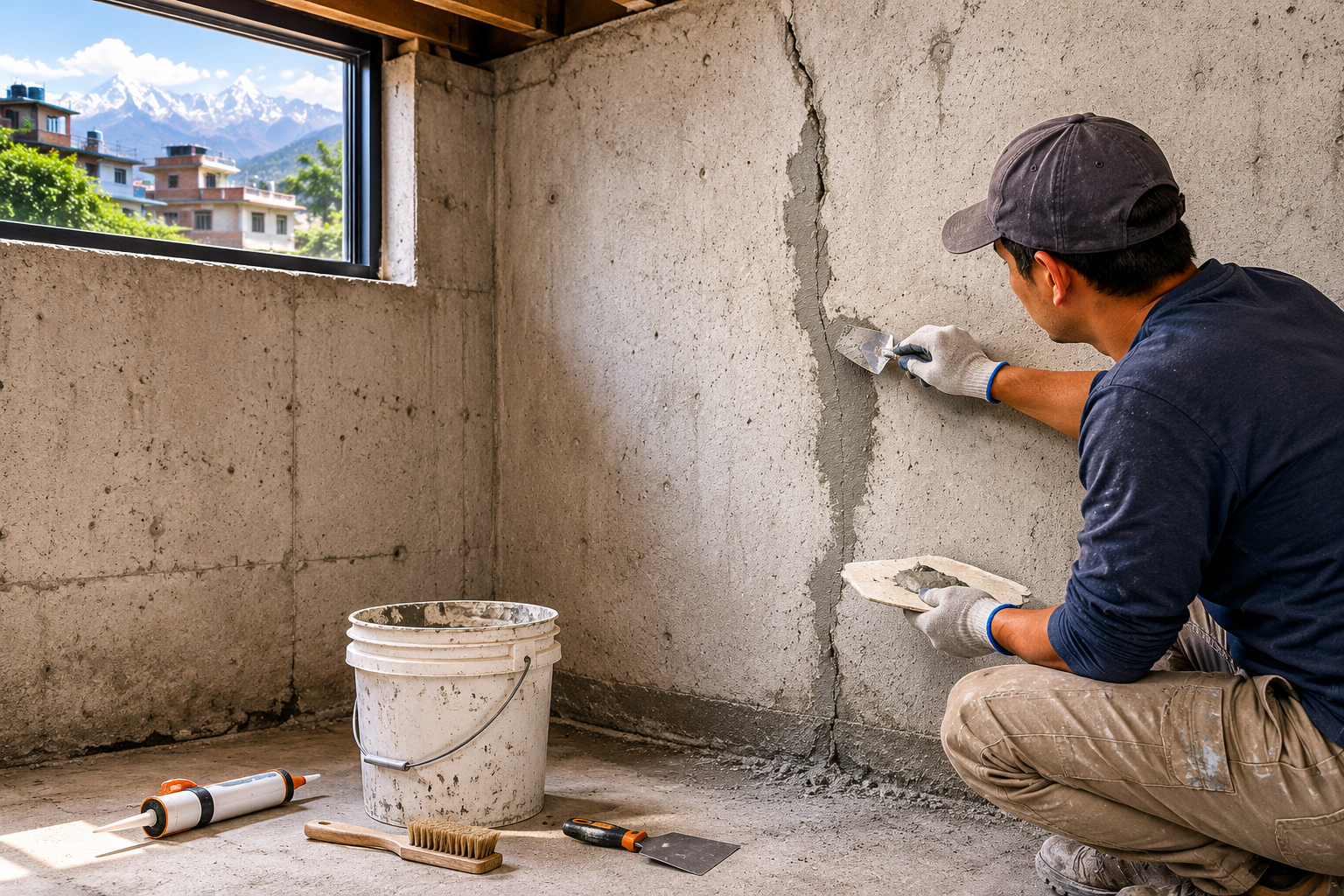
Use a wire brush to remove paint, dust, and debris along the length of the crack. This gives the filler a clean surface to bond to.
3. Remove debris from the crack
Vacuum out the crack. Blow it clean since any leftover dust or grit will weaken the bond of the filler for the crack.
4. Dry the area around the crack
The crack in your basement wall needs to be completely dry before filling. If there is any dampness, wait for a dry spell or use a fan or hairdryer on low heat to speed things along for the crack.
5. Widen the crack slightly if needed for the filler
For thin hairline cracks in your basement wall running a chisel lightly along the crack to open it to roughly 6mm gives the filler enough surface area to grip properly for the crack in your basement wall. Skip this step if the crack is already a width.
6. Apply crack filler to the crack
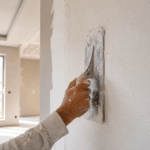
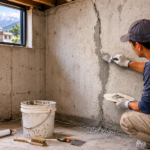
For surface-level cracks in your basement wall, cement or a polymer-modified cement filler works well and is the most commonly used option in Nepal for the crack. For more structural cracks in your basement wall, an epoxy or polyurethane injection is a better option since it bonds through the full depth of the wall rather than just sealing the surface of the crack. Press the filler firmly into the crack with a putty knife working it in rather than just smoothing it over the top of the crack.
7. Smooth the surface of the crack
Once filled, use the putty knife to level the patch with the surrounding wall then let it firm up slightly before doing a light pass with sandpaper once dry for the crack in your basement wall.
8. Allow curing of the crack filler
Most hydraulic cement sets within 20 to 30 minutes. Needs at least 24 to 48 hours to cure fully for the crack in your basement wall. Painting or waterproofing over it early traps moisture underneath and the crack in your basement wall often reopens.
9. Waterproof the area of the crack
Once cured, apply a masonry coating over the patched area of the crack and slightly beyond its edges. This adds a layer of protection against monsoon moisture reaching the repair from the surface side of the crack in your basement wall.
10. Inspect the crack after monsoon
Check the patch again once the rainy season has passed. A repaired hairline or vertical crack in your basement wall should stay sealed. If the crack in your basement wall reopens along the line that is a sign the underlying cause was not just surface shrinkage of the crack.
Best Crack Fillers Available in Nepal
| Product Type | Common Use | Notes |
| Sika range (crack sealants and repair mortars) | Surface-level cracks and general concrete repair | Widely stocked at construction supply shops in Kathmandu; suited to standard hairline and vertical cracks |
| Dr. Fixit crack repair pastes | Surface sealing and minor crack filling | Commonly used for cosmetic repairs on interior and basement walls |
| Fosroc repair products | Structural-grade repair mortars and injection systems | Typically used by contractors for larger or deeper cracks rather than simple DIY jobs |
| Polymer-modified cement fillers | General-purpose crack filling | A cost-effective option for hairline to medium cracks, easy to find locally |
Availability varies by shop and location, and it’s worth asking your local hardware supplier which product they stock and recommend for your specific crack type rather than assuming one brand suits every situation. None of these products are a substitute for a professional assessment if the crack falls into the warning signs below.
When Should You Call A Professional
Not every small crack in a basement wall in Nepal is something you can fix yourself over the weekend. You should call an engineer or an experienced contractor if you see any of these things:
- The crack is more than 5mm
- Water is actually coming through the crack not just making a damp spot
- The crack runs horizontally
- The wall is curving outward
- You see signs that the foundation of your house is moving, like doors that get stuck or floors that’re not level
- A crack that you fixed before has come back in the place
- The crack is not straight, it goes in a zigzag pattern along the lines of the mortar in a brick or block wall
None of these automatically mean your house is unsafe, but they mean the cause likely sits below the surface, and no amount of surface filler addresses what’s happening underneath. If the crack turns out to be part of a bigger renovation need, our Affordable Home Renovation Services in Nepal for Modern Living blog is a good next read.
Tips to Prevent Small Cracks in Basement Walls in Nepal
- Make sure gutters and downspouts direct rainwater away from the foundation rather than letting it pool nearby
- Check that the ground slopes away from your house rather than toward it
- Have damp-proofing and waterproofing inspected every few years, especially before monsoon season
- Avoid overloading the area directly around your foundation with heavy construction material or standing water
- Address hairline cracks early rather than waiting for them to widen
- If you’re building new, insist on proper curing time for concrete and correctly mixed cement rather than rushing the schedule
For a broader look at keeping the rest of your house in shape alongside your foundation, our Top 10 Home Maintenance Tips Every Homeowner Should Know in Nepal blog covers the basics worth staying on top of year-round.
Common Mistakes to Avoid
- You should not use the wall putty for concrete. It will not stick properly and the crack will come back very soon.
- You have to wait until the crack is fully cured before you paint over it. If you do not wait, the moisture will get trapped underneath.
- Do not ignore a crack just because it looks like it is not a big deal. You have to check if the crack is getting bigger.
- You need to clean out the dust and debris from the crack before you fill it.
- Not every crack needs an expensive repair. Some are purely cosmetic and need very little work. But don’t assume every crack is harmless either. Some genuinely need a professional look.
- On the other hand, concrete cracks are not always harmless. Some of them really need to be looked at by a professional.
- After the patch is cured, you have to make sure it is waterproof.
- You should check the repair again after the monsoon to make sure it is still good.
- The filler you use for cracks has to be rated for exterior or below-ground use especially for basement walls.
- When you are fixing a crack, be careful not to make it bigger, with a chisel. This can actually make the surrounding concrete weaker, which is not what you want.
Cost of Repairing Small Basement Wall Cracks in Nepal
| Repair Type | Estimated Cost Range (NPR) |
| DIY repair (materials only, hairline to small crack) | Roughly NPR 500 to 2,000 |
| Professional repair (labor and materials, small to medium crack) | Roughly NPR 2,500 to 8,000 |
| Waterproof coating application (per basement wall section) | Roughly NPR 3,000 to 10,000 depending on area covered |
Note: These figures are general estimates only. Actual cost depends on the size and depth of the crack, the materials used, your location, and the contractor or supplier you work with. It’s always worth getting a direct quote rather than budgeting purely off an online estimate.
Benefits of Repairing Basement Cracks Early
Fixing a small crack when you first notice is far cheaper and simpler than waiting. An unaddressed crack lets moisture into the wall over successive monsoon seasons, which can lead to mold growth, weakened concrete, and eventually a repair job that involves far more than a tube of filler. Early repair also protects anything stored in the basement from water damage and helps preserve the structural integrity of the wall over the long term. In a climate with as much seasonal moisture as Nepal’s, this is one of those small maintenance tasks that saves real money down the line.
Key Takeaways
- Small cracks in basement walls in Nepal happen because the wall is getting smaller, it is getting hotter or colder or the ground is moving a little and this is not a big problem for the whole house.
- Vertical and hairline cracks are usually okay for you to fix by yourself.
- If you see cracks that go across the wall or are getting bigger or if water is coming in or if the wall is bulging, you should call for professional help.
- You need to make sure the area is clean and dry, let it sit for a while before you put stuff on it.
- Then you should check to fix again after the monsoon season to make sure it is still good.
- If you want to stop cracks from happening in the first place, you should make sure the water can drain properly and you should check the walls every now and then to make sure they are still waterproof.
Frequently Asked Questions
1. Can I fix small cracks in basement walls in Nepal by myself?
Yes, you can fix basement wall cracks by yourself if the basement wall crack is very small, like a hairline or it is going up or is less than 5mm. But, if the basement wall crack is bigger or it is going across or water is coming out then you need to take a look first.
2. Which filler is best for basement wall cracks in Nepal?
It depends on the crack. Hydraulic cement or polymer-modified filler works for surface cracks. For deeper ones, epoxy or polyurethane injection holds up better. Ask your supplier what they’d recommend for your specific crack.
3. Are hairline basement wall cracks bad?
Usually, hairline basement wall cracks are not that bad. They happen when the basement wall is shrinking and it is normal. It is still a good idea to fix hairline basement wall cracks so water does not get in over time.
4. When should I hire an expert?
If the basement wall crack is bigger than 5mm or it is going across or the wall is bulging or the doors are sticking or the floor is not level then you should hire an expert.
5. Do basement wall cracks get worse during the season?
Often yes. When the soil is wet, it pushes harder against the basement wall so basement wall cracks that were small during the season can get bigger when it rains.
6. Can earthquakes cause basement wall cracks?
Yes, even small earthquakes that do not damage parts of the house can cause basement wall cracks. Old buildings that were built before the current rules for earthquakes are more likely to get basement wall cracks.
7. How often should I check my basement walls?
You should take a look at basement walls once or twice a year. It is best to do it before and after the rainy season so you can catch any new basement wall cracks early.
Conclusion
Knowing how to fix small cracks in basement walls in Nepal starts with telling the difference between a cosmetic patch job and a real structural problem. If you see cracks that go across the wall or water is leaking in or the wall is bulging out, that is a different story. These things can mean that the wall is not strong enough and you should get a professional to take a look.
Not sure if your crack is a small problem or a big one? Reshape Home can inspect it and tell you honestly what you’re dealing with.
More Services


Recent Posts
-

Gypsum Plaster in Nepal: The Complete Guide to Cost, Benefits, and Application
Sep 18, 2026 | reshapehome
-
House Design in Nepal: The Complete 2026 Guide
Aug 14, 2026 | reshapehome
-
Essential Guide: How to Fix Small Cracks in Basement Walls in Nepal
Aug 02, 2026 | reshapehome
-
Glass Price in Nepal 2026: Complete Guide
Jul 17, 2026 | reshapehome
-
Steel Price in Nepal 2026: Latest Rod Rates & Buying Guide
Jul 13, 2026 | reshapehome
-
Tiles Price in Nepal 2026: Cost Guide for Floors and Walls
Jun 28, 2026 | reshapehome
-
Interior Design in Nepal: Complete Guide for Beautiful Modern Homes (2026)
Jun 21, 2026 | reshapehome
-
Cement Price in Nepal 2026: Latest Rates, Trends & Buying Guide
May 28, 2026 | reshapehome