Quick answer
The waterproofing cost in Nepal lies between NPR 50 to 900 per square foot, depending on the technique used. Cement-based coatings are the most economical, whereas polyurethane (PU) based coatings are relatively more expensive.
Most service guides of Kathmandu city provide an average value of NPR 350 per sq ft. The roofing, terrace, and basement have the highest cost. The bathrooms and water tanks cost lower.
For a real quote, a site visit is the only reliable way.
Key takeaways
- Price per square foot will depend on the method, the surface, and the condition of the surface.
- The cost of cement coating is low, while PU and membranes cost more but are more durable.
- Surface preparation and repair can increase the total price by 10 to 30 percent.
- Time required for application will be from two to five days.
- Fixing leakages once they happen will cost much more.
- Always get an estimate and a warranty in writing.
Why does waterproofing matter in Nepal?
Nepal receives plenty of monsoon rains. The Kathmandu Valley has many old houses with flat concrete roofs and small bathrooms crowded with pipes.
Water seeks out all weaknesses. Water gets into even tiny cracks. Water follows the pipe lines. Water sits on level platforms and seeps into the slab.
Then the damage starts:
- Wall and ceiling spots due to moisture
- Faded paint and white salt deposits
- Mouldy odour and growth
- Rusty steel embedded in concrete
- Faulty wiring and furniture damage
Waterproofing stops this. It costs money upfront. But it saves much more than it costs.
A building guideline from Nepal points out that waterproofing of bathrooms, rooftops, and outside walls will cost about NPR 50,000 to 1,00,000 on a new construction project. Damage repair due to leakage is much more costly.
Waterproofing cost by method
Different methods suit different places. Here is a simple guide to waterproofing cost in Nepal. These are typical market ranges. Your quote may differ.
| Method | Best for | Approx. cost (NPR per sq ft) |
| Cementitious coating | Bathrooms, kitchens, water tanks | 50 – 150 |
| Acrylic/liquid membrane | Roofs, walls, terraces | 150 – 400 |
| Bituminous coating or membrane | Basements, foundations, roofs | 300 – 800 |
| PU (polyurethane) coating | Terraces, roofs, balconies | 400 – 900 |
| PVC membrane | Flat roofs, large terraces | 120 – 200 |
The price range for cement-based coatings is about NPR 50-150 per sq ft. The prices of liquid coatings vary between NPR 150-400. Bituminous applications cost between NPR 300-800. Prices of PU systems range from NPR 400-900. PVC membranes may be priced between NPR 120-200 per sq ft.
Prices differ between suppliers. That is normal. Treat any single number as a starting point.
Waterproofing cost by area of your home
The place matters as much as the method. Here is what to expect.
Bathroom waterproofing cost
Bathrooms are small, but they see water every day. They need a thorough job.
Cement-based or polymer-modified coating is common here. Expect roughly NPR 100 to 300 per sq ft of treated area. Floor waterproofing in Kathmandu often falls in this range, depending on the surface and the system used.
A typical bathroom needs the floor, the corners, and the lower part of the walls treated. Sometimes the full wall is done around the shower.
Also read our bathroom renovation guide on why leaks keep coming back.
Roof and terrace waterproofing cost
Concrete flat roofs have the capacity to hold rainwater. The sun rays bake the roof throughout the year, causing cracking and letting the water in.
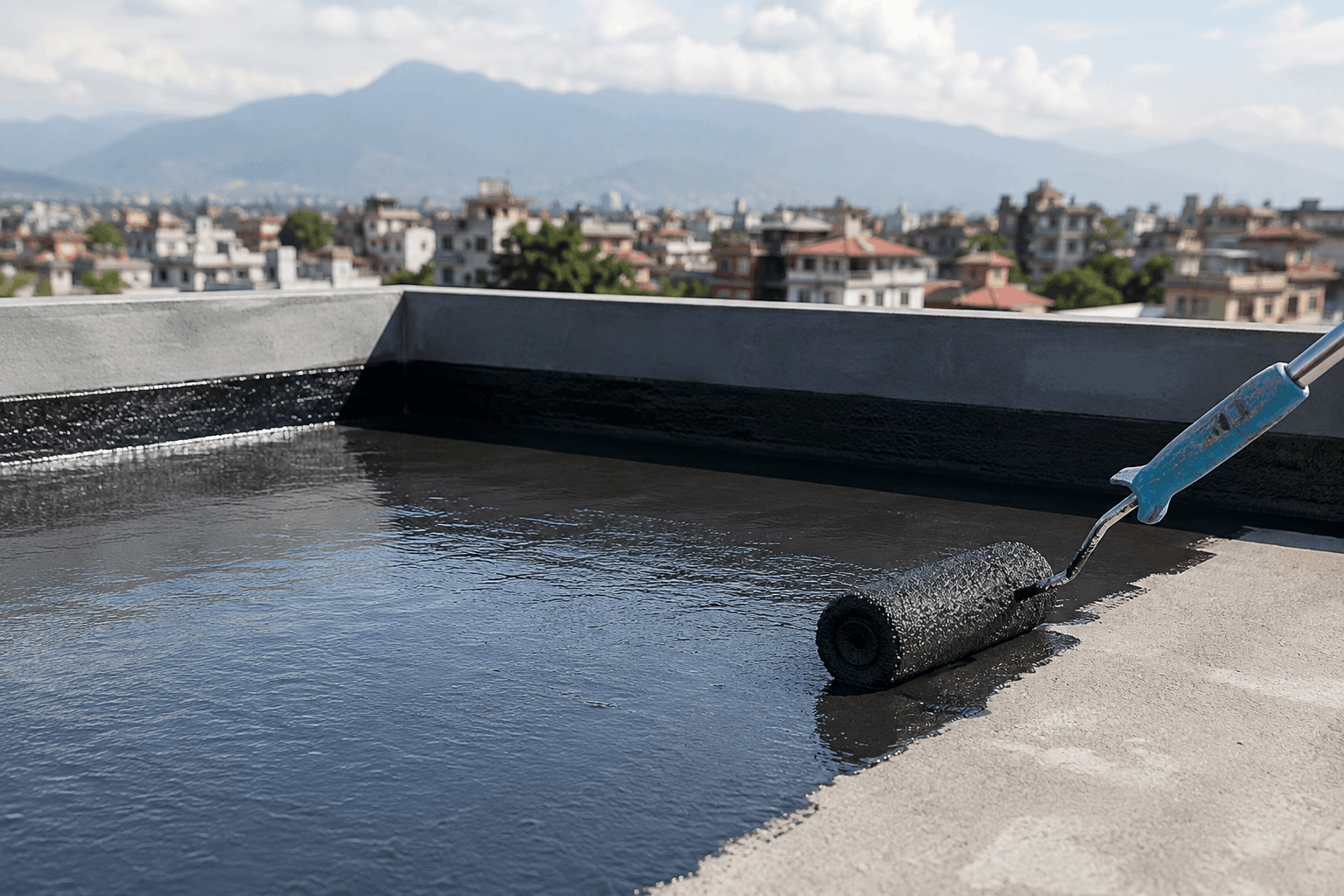
The roof should be coated with UV-resistant materials. Examples are acrylic, PU, and PVC coatings. It costs around NPR 150 – 900 per sq ft.
The larger your roof is, the cheaper it will be per sq ft. The smaller the roof is, the more expensive it becomes per sq ft.
Basement waterproofing cost
Basements protect against ground moisture and water pressure. Good waterproofing systems are essential. Common systems used include bituminous membranes and cementitious coatings.
The cost is higher as the job is more difficult. The surfaces are inaccessible. Preparatory work takes longer. Mistakes are very expensive, because the basement walls are not easy to redo.
Water tank waterproofing cost
The underground as well as overhead tanks require coatings which are not toxic. The cement-based system is one of the most widely used methods. It may be slightly less costly per square foot, but it should be safe for drinking water.
External wall waterproofing cost
External walls get exposed to rain, sunlight, and dust. Paints with damp-proofing properties and elastomeric paints can be used here. Crack repair is the initial step to be done.
Balcony, kitchen, and washroom areas
They are small areas that require cement-based or liquid paints. They are cheaper than roofs but cannot be overlooked.
How to estimate your own waterproofing cost in Nepal
The math is simple:
Area (sq ft) × rate per sq ft = estimated cost
Here is one example from a Kathmandu guide. 500 square feet at NPR 150 per square foot comes to roughly NPR 75,000.
Now let us do some other examples.
Example 1: Bathroom: Flooring and Walls below, 90 square feet total. With rate of NPR 150 per square feet, the cost will be around NPR 13,500. Plus preparation charges and ponding test. The final quotation may vary between NPR 15,000 and 25,000.
Example 2: Terrace: A terrace roof of 600 sq ft with acrylic coating costing NPR 200 per sq ft comes out to roughly NPR 1,20,000. Include the cost of crack sealing and edge sealing. It is expected that the total cost can touch NPR 1,40,000 to 1,50,000.
Example 3: Wall of basement: A 400 sq ft basement wall with bituminous coating costing NPR 400 per sq ft comes out to NPR 1,60,000. Include the cost of drainage and protection boards. The cost will definitely be more.
Always allow 10% to 20% extra for contingencies.
What affects waterproofing cost in Nepal?
Why do two quotes for the same roof differ? Look at these seven factors.
1. Type of waterproofing system
A cement-based system is cheaper than PU and membrane systems. The higher the quality of the system, the higher the cost, but it lasts longer.
2. Area size
Large-scale projects have a lower cost per square foot. On small-scale projects, the cost per square foot is higher since travelling and setup remain the same for both sizes.
3. Surface condition
A surface that is cracked, moist, or dusty should be fixed first. Failure to do this is the primary reason for failure in coating application.
4. Product brand and quality
The waterproofing products are priced between NPR 50 to NPR 1,500 per liter depending on quality and brand. Poor quality waterproofing products may get damaged after only 2 or 3 monsoons.
5. Number of coats
Multiple coats tend to last longer than single coats. More coats translate to more material and labor.
6. Access and height
Roofing tall structures requires scaffolding and access. Ventilation is needed for basements. Both increase labour costs.
7. Labor skill
The skilled workers earn more each day. But they can apply the roofing product evenly without any pin holes and weak points.
What is included in a proper quote?
A good quote is detailed. It should list:
- Area to be painted
- Methods of surface preparation
- Cracks and joints treatment
- Type of paint/brand name
- Number of coats
- Drying/Curing time
- Methods of testing
- Warranty period
- Labor cost and material cost
A one-line quote is a red flag. If you see “waterproofing: NPR 80,000” with no detail, ask questions.
Hidden costs to watch for
Homeowners are subject to additional fees. Budget accordingly.
- Crack repair: Crack areas should be filled before painting.
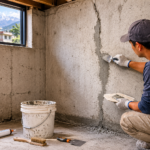
- Plaster repair: The weak plaster will fall off, taking the coating with it.
- Removing old coatings: Failure of previous coats might require removal.
- Drainage fixes: Clogged roof drains lead to ponding.
- Protective screed or tiles: Certain membranes require a protective layer.
- Scaffolding or safety gear: Required for high walls.
- Repainting. Damp walls often need fresh paint after drying.
Set aside a buffer. You will thank yourself later.
How long does waterproofing take?
Waterproofing projects usually take two to five days to complete. This encompasses preparation, application of layers, and drying in between.
Then comes curing. Many systems need several days before they can face water. Some need a ponding test. This means filling the area with water for 24 to 48 hours to check for leaks.
Do not rush this step. A fast job is not always a good job.
Signs you need waterproofing now
Don’t wait for a flood. Watch out for these warning signs.
- Damp patches on the walls/ceilings
- Peeling and blistering paint
- Whitish patches or efflorescence on the walls
- A musty odour in enclosed spaces
- Water stains below the bathrooms
- Cracks on the roof/terrace
- Puddles of water on the terrace after rains
- Stains of rusting near the ceiling
When you have seen two or more warning signs, get an inspection done. It is always cheaper to solve a problem early on.
Best time to waterproof in Nepal
Both the cost and the quality get affected by timing.
- Before the monsoon (March to May): Ideal time to apply paints. Dry conditions favor curing of the paint. This ensures that you are well-prepared before the onset of the monsoon.
- After the monsoon (October to November): Another favorable period. Dry walls make it easy to locate leaking spots.
- During the monsoon (June to September): Wet surfaces hinder proper coating. This causes a delay in the process.
- Winter (December to February): Favourable for most types of systems. Low temperatures may affect curing; follow manufacturer’s instructions.
Most contractors are very busy just before the monsoons. Plan and book in advance.
Waterproofing for new construction vs old buildings
New buildings
Waterproofing becomes simple and cheap during the construction phase because waterproofing could be done before tile-laying and plastering. Waterproofing is supposed to be done in bathrooms, rooftops, and basements before applying any finishing touches.
Old buildings
Repairs are costly. They will be required to find out where the leak is coming from, remove the layer that is leaking and fix the cracks. Sometimes, they will have to dismantle the tiles to get to the slab below.
This means that it is always better to be proactive with waterproofing. A small problem now saves a bigger headache in future.
DIY or professional waterproofing?
You can do some jobs yourself. Small crack sealing and a fresh coat of damp-proof paint on a dry wall are fine.
But avoid DIY for:
- Roof and terrace work
- Bathroom floor waterproofing underneath the tiles
- Basements
- Large cracks
- Water leaks
Mistakes in these areas are hard to spot. They show up only after the next heavy rain. And by then, the damage has started.
How to choose a waterproofing contractor
Ask these questions before you hire.
- Will you check the site first? A reputable contractor checks before providing the quotation.
- What product and what brand will you use? Be sure to ask for the name of the product.
- How many layers will you put on?
- Are cracks repaired first?
- Do you perform a ponding test?
- What is your guarantee? Be sure to get it in writing.
- May I see past work? Pictures do help, but site visits will help even more.
- Who does all the related work? Having one team to do all the work related to plumbing, plastering, and finishing will save you time.
Be careful with very low quotes. Weak products and skipped steps are common reasons for a cheap price.
Compare Quotes Side by Side
Use a simple table like this. It shows gaps quickly. The example below is for a 600 sq ft terrace in Kathmandu. The quotes are illustrative, and the rates match typical Nepal market ranges.
| Question | Quote A | Quote B | Quote C |
| Area covered (sq ft) | 600 | 600 | 600 |
| Product and brand | Not named | Named acrylic coating, data sheet shown | Named PU system, data sheet shown |
| Number of coats | 1 | 2, plus primer | 2, plus primer |
| Crack repair included? | No | Yes | Yes |
| Ponding test included? | No | Yes (48 hours) | Yes (48 hours) |
| Warranty (years) | 1 (verbal only) | 5 (written) | 5 (written, labor and materials) |
| Timeline (days) | 2 | 5 | 6–7 |
| Total price | About NPR 54,000 | About NPR 1,35,000 | About NPR 2,40,000 |
The most economical quotation is Quote A; however, it does not include the leak prevention procedure. The most comprehensive quotation is Quote B at a reasonable price. Quote C is the costliest among the quotations.
The best value for money will be the most comprehensive quotation at a reasonable price, which is not necessarily the most economical one.
Ways to save money on waterproofing
You can lower your waterproofing cost in Nepal without cutting quality.
- Do it during construction: It is cheaper than repairing water leaks after completion.
- Combine work: Waterproof with painting, floor covering, or bathroom renovation.
- Use the right method: Do not use expensive PU coating for a small bathroom. Use good-quality coating for large terraces.
- Repair small cracks early: Small cracks become larger every monsoon.
- Clear roof drainage: Drainage should be cleared before every monsoon season.
- Book early: Early booking will help lower costs.
- Take three quotations: Compare quality and not cost alone.
Common mistakes that raise cost
- Skipping surface preparation
- Putting on coating on wet walls
- Applying a single thin coat
- Ignoring the corners and joints
- Missing out on the pipe penetrations
- Not testing before tiling
- Selecting the lowest bid without reading the scope
These errors all lead to leaks. And any leak costs double.
Waterproofing and your property value
Dry and clean structures are always pleasing to look at and more durable. Customers can see the damp stains on the building. They can also smell the musty odors.
Proper waterproofing will help you keep your property safe from any damage. It will also save you money in repairs.
Why Reshape Home?
Reshape Home is a trusted repair and maintenance company in Kathmandu. We bring more than 18 years of construction experience to every project.
When you work with us, you get:
- Prior Estimation Without Any Obligation
- Inspection of the site to identify the root cause of leakage
- One team to do plumbing, plastering, painting and floor works
- Available in Kathmandu, Lalitpur and Bhaktapur
- Monitoring of your order to check its status
- Post-completion follow-up services
Waterproofing often connects with other work, like bathroom upgrades, roof repair, and repainting. Our renovation services and plumbing services cover the full job, so you deal with one team.
Final thoughts
The waterproofing cost in Nepal is dependent on where and how you apply the waterproofing materials. Waterproofing a small bathroom might cost you a few thousand rupees. A large roof or basement can cost you lakhs of rupees.
However, the aim of the process remains constant. Keep the water out to protect your house.
Apply the appropriate waterproofing solution in the appropriate place and ensure proper application and guarantee. Do not wait for the monsoon season to show you the loopholes.
Need a waterproofing estimate? Reshape Home offers free estimates across Kathmandu, Lalitpur, and Bhaktapur. Call 9841291339 or 014373124, email info@reshapehome.com, or book a service online.
Frequently asked questions
1. How much does waterproofing cost in Nepal?
Waterproofing cost in Nepal ranges from about NPR 50 to 900 per sq ft based on how waterproofing is done. The range of cost for waterproofing services in Kathmandu is around NPR 80 to 350 per sq ft according to some service guides.
2. What is the roof waterproofing cost per sq ft in Nepal?
Roof coating costs vary depending on the roofing system selected. Liquid or acrylic coating will cost NPR 150 to 400 per square feet while PU coating will cost NPR 400 to 900. Larger roofs cost less per square feet compared to smaller terrace roofs.
3. How long does waterproofing last?
Typically, waterproofing lasts 5 to 15 years, depending on the method and upkeep. Another puts it at 5 to 10 years, depending on the product and surface. Good surface prep and a written warranty help it last longer.
4. What is the best waterproofing method for a roof in Nepal?
Liquid Membrane Waterproofing is always regarded to be the best option for roofs and walls owing to the heavy rains. Polyurethane coatings can be used for roofs that have direct exposure to sunlight and rain.
5. What is the best time to waterproof a house in Nepal?
The best time is during construction or before the monsoon. Dry weather helps coatings bond and cure. Work in humid or rainy weather is slower and riskier.
6. Can I do waterproofing myself?
Cement-based waterproofing is DIY-friendly, but complex methods need experts. Small areas like a bathroom or balcony can work for DIY. Roofs and basements need professional help. A mistake on a roof or basement often shows up only after the next heavy rain.
7. How much does a waterproofing membrane cost in Nepal?
8. What affects the waterproofing cost in Nepal?
Three primary considerations are the area size, material type, and job complexity. Repairing cracks, condition of the surface, brand, number of coats, accessibility, and warranty also determine the cost. Remember to always compare detailed quotes and not just prices.
More Services


Recent Posts
-

Common Plumbing Problems in Nepal: Causes, Safe Fixes, and When to Call a Plumber
Oct 18, 2026 | reshapehome
-
Earthquake Resistant House Design in Nepal: The Complete Homeowner’s Guide (2026)
Oct 04, 2026 | reshapehome
-
Waterproofing Cost in Nepal (2026): Price Per Sq Ft Guide
Sep 28, 2026 | reshapehome
-
False Ceiling Price in Nepal: Complete 2026 Cost Guide by Material & Room
Sep 22, 2026 | reshapehome
-
Gypsum Plaster in Nepal: The Complete Guide to Cost, Benefits, and Application
Sep 18, 2026 | reshapehome
-
House Design in Nepal: The Complete 2026 Guide
Aug 14, 2026 | reshapehome
-
Essential Guide: How to Fix Small Cracks in Basement Walls in Nepal
Aug 02, 2026 | reshapehome
-
Glass Price in Nepal 2026: Complete Guide
Jul 17, 2026 | reshapehome