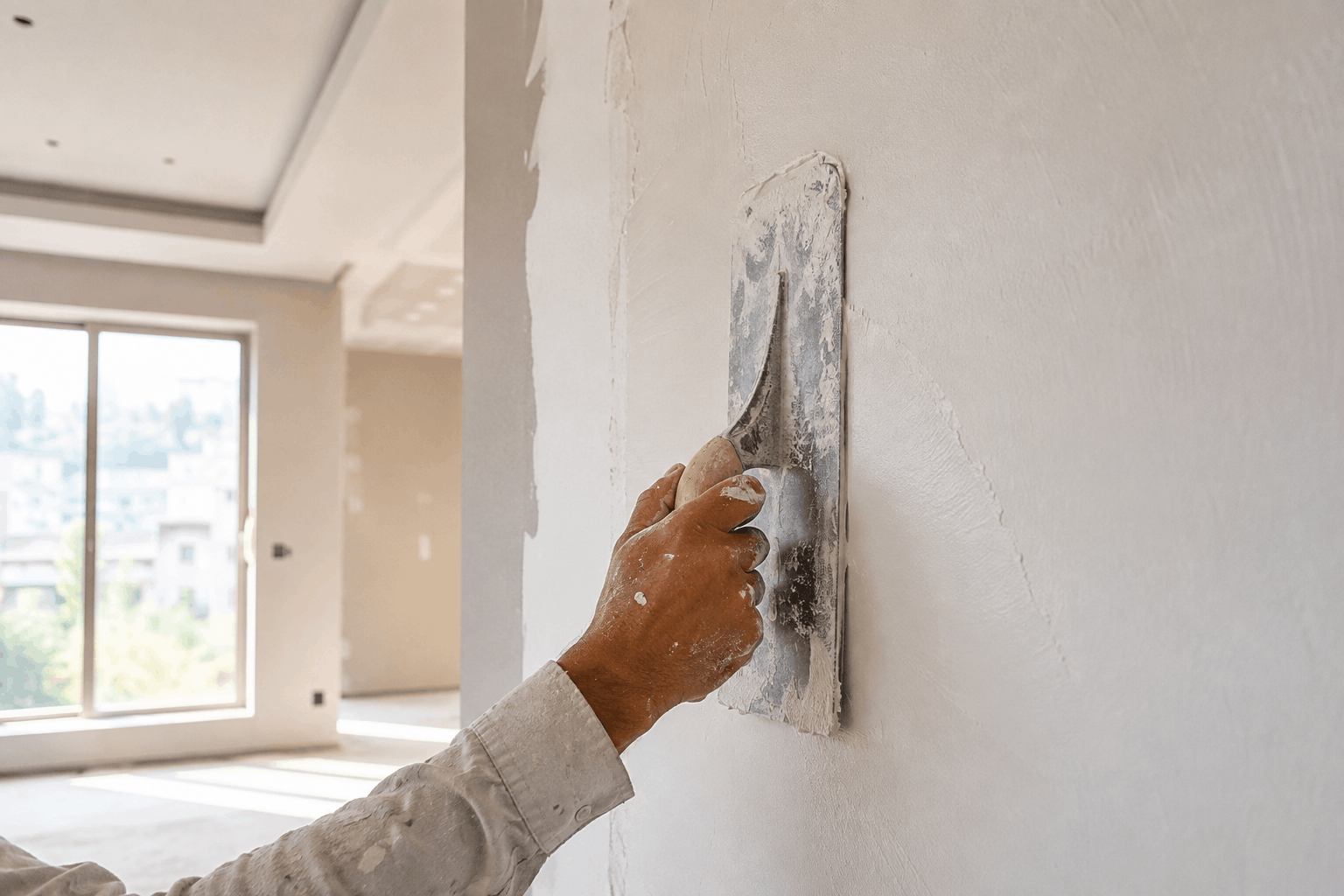
Walls in Nepal take a beating. The damp monsoons, earthquake tremors and dusty summers all mark their presence. If the walls appear rough, your contractor has applied plain cement plaster. There is a better option. It is known as gypsum plaster.
This guide addresses the questions that Nepali homeowners ask. What is it? What does it cost? Is it safe for earthquake-prone areas? We will explain each of them in simple terms. At the end of the day, you’ll be able to decide whether or not gypsum plaster is a good fit for your home. And if you are already planning a wider renovation or interior refresh, this material is worth knowing about before your contractor picks up a trowel.
What Is Gypsum Plaster?
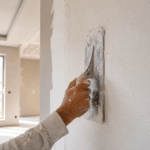
Gypsum plaster is a soft mineral that is used as a wall finish. The workers heat and grind the mineral into a fine powder. They add water in the field. This makes a smooth paste! This paste goes directly onto brick or block walls.
It skips the sand-and-cement mix used in traditional plastering. It also skips the putty layer most cement walls need before painting. This makes it quicker to apply and simpler to complete.
There are two types of Gypsum Plaster available in the Nepali market:
- Ready-mix gypsum plaster: This comes in bags, pre-blended and ready to mix with water. Brands like Saint-Gobain Gyproc and local suppliers sell this type.
- POP-based gypsum plaster: The purer and faster-setting form is called Plaster of Paris (POP). It is commonly applied by contractors in fine finishing coats or decorating.
It is used in most of the house works in Kathmandu as ready-mix plaster for walls and ceilings. Provides a smoother surface than cement and requires much less preparation before painting.
Gypsum Plaster vs. Cement Plaster: The Real Difference
Homeowners often ask the same question first. Why switch from cement plaster, the material everyone already knows? Here is a side-by-side look.
| Factor | Gypsum Plaster | Cement Plaster |
| Finish | Smooth, ready for paint | Rough, needs putty |
| Curing | No water curing needed | Needs 7 to 21 days of water curing |
| Setting time | Paint-ready in about 4 to 7 days | Paint-ready in 2 to 3 weeks |
| Weight | Lighter on the structure | Heavier, adds structural load |
| Cracking | Low shrinkage, fewer hairline cracks | More prone to shrinkage cracks |
| Water use | Little to no water needed | High water use during curing |
| Fire resistance | Naturally fire-resistant | Moderate |
| Labour and time | Faster application, less manpower | Slower, more labour-intensive |
| Best for | Interior walls and ceilings | Exterior walls, wet areas |
| Cost | Material costs more, but saves on putty and labour | Material costs less, but adds putty and curing costs |
The pattern is clear. This finish costs more per bag. But it often costs less overall. You skip the putty coat. You skip weeks of water curing. You finish the job faster and move in sooner.
Why Gypsum Plaster Makes Sense for Nepali Homes
Nepal is not an easy place to build. Earthquakes, heavy monsoons, and a fast-growing construction market all shape what materials make sense here. This finish fits several of these needs directly.
1. It Reduces Structural Load
Nepal is located in a seismically active area. Each additional kilogram that you apply to the walls will be putting stress on the structure in the event of an earthquake. It is much lighter than a comparable thickness of a cement and sand mixture. For this very reason, lightweight materials are gaining popularity among engineers and builders.
2. It Saves Water
Water is not free, nor easily available in all parts of the Kathmandu Valley. The cement plaster needs curing in water for one to three weeks on a daily basis. Its gypsum counterpart does not require any water at all. In a moderate-sized house, this can mean saving thousands of liters of water.
3. It Cuts Construction Time
The construction period in Nepal is very short. The rains during the monsoon season, breaks due to festivals, and shortages of materials all reduce your time available. This coating takes just a few hours to set and is usually ready for painting in a week’s time. Cement plaster may take up to three weeks to be ready for painting.
4. It Handles Kathmandu’s Dust and Temperature Swings Well
The gypsum plaster has very low thermal conductivity. It ensures that the interior remains stable during both summer and winter seasons in Kathmandu. It does not allow dust to accumulate because it has a smooth surface as compared to raw cement.
5. It Gives You a Smoother, Paint-Ready Finish
Cement walls always require putty work before painting. This is additional material expenditure and an additional procedure. On the other hand, gypsum plaster has a smooth finish that requires no putty work at all. This reduces the risk of mistakes.
Where to Use Gypsum Plaster (and Where to Avoid It)
This material is not a universal fix. It performs best in certain settings and poorly in others.
Good uses of gypsum:
- Walls in the bedroom and living rooms
- Ceiling areas, including false ceilings
- Interior walls separating spaces
- Home office spaces
- Staircases and hallways
Avoid gypsum plaster in these spots:
- Bathrooms and kitchens, where standing water and steam exist
- External walls subjected to the rains of monsoon season
- Damp basements or those suffering from any seepage problem
- Locations near water storage tanks or exposed pipes
Gypsum is not by nature a material resistant to water. It will gradually lose its strength and become soft or flake due to continuous exposure to moisture. In wet environments, cement plaster with appropriate waterproof coating remains the better option.
How Gypsum Plastering Is Applied: Step by Step
A good gypsum plaster job depends heavily on correct application. Here is what the process looks like when done right.
- Surface preparation: The wall is cleaned of dust, loose material, and any previous coating of paint. If there are cracks or holes, they are to be repaired before proceeding further.
- Bonding agent (if needed): Smoothened surfaces such as those made up of concrete require a bonding agent to ensure that the gypsum plaster adheres well.
- Mixing: Gypsum powder is blended with clean water in the right proportions. The mixture should be free of lumps and easy to handle, normally within 20 to 30 minutes.
- First coat application: Plaster is applied with a trowel, section by section, to ensure that the surface remains even.
- Leveling: The straightedge or level determines the flatness of the wall as the plaster is applied by fixing any bumps.
- Finishing: As the primer coat dries out, there is a finishing touch applied on the wall that provides its polished texture.
- Drying: Drying takes place by itself. Water curing is not needed. Normally, most surfaces are ready to be painted within a week.
Skilled application matters more with gypsum than with cement. A rushed job can leave uneven patches or a chalky surface. This is one reason to hire an experienced team rather than a general laborer.
Gypsum Plastering Cost: What Affects the Price
Most homeowners want to know the exact cost of gypsum plastering before starting a project. However, there is no fixed price because the total cost depends on the size and condition of the walls, the type of building, labor, and the finish you choose.
Here are some of the main factors that affect the cost:
- Wall area: Gypsum plaster is usually charged by the wall surface area, not the floor area. The total wall area can be around three to three and a half times the carpet area, depending on the layout of the house.
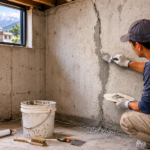
- Condition of the walls: Walls that are uneven, cracked, or damaged may need extra preparation and more plaster, which can increase the cost.
- Type of surface: Brick walls, hollow blocks, and concrete surfaces may require different preparation or bonding treatments before gypsum plaster can be applied.
- Size of the project: Larger projects may have a lower cost per square foot because labor, tools, and setup costs are spread over a larger area.
- Access to the site: Plastering rooms on upper floors can take more time, especially when there is no lift or when materials are difficult to move to the work area.
- Type of finish: A standard smooth finish will generally cost less than a more detailed or premium finish.
Gypsum plaster can have a higher material cost than cement plaster. However, the overall cost can be different once you consider the work saved on putty, water curing, and the shorter time needed to complete the plastering. In some projects, this can make the total cost similar to, or even lower than, cement plaster followed by putty.
Prices can also vary across Kathmandu, Lalitpur, and Bhaktapur depending on local labor rates, material prices, transportation, and site conditions. For this reason, getting an estimate based on your actual property is more useful than relying on a general per-square-foot rate.
Reshape Home provides a free estimation so you can get a clearer idea of the cost before starting the work. The team checks the site, measures the required wall area, and provides a quote based on the actual requirements of your project.
How Long Does Gypsum Plaster Last?
A well-applied gypsum plaster coating on walls may last 15 to 20 years or even more, depending on conditions like a dry and well-ventilated atmosphere. The factors affecting its life include:
- Application quality: A well-mixed and well-levelled coat will not crack as easily as an improperly applied one.
- Room humidity: Well-ventilated rooms with low moisture levels will have it last longer.
- Wall movement: Houses that experience frequent minor earthquakes might develop cracks after some time, although gypsum tends to be less susceptible to cracking than cement.
- Maintenance: Regular cleaning and timely repair of any chips will ensure optimal functioning for years.
Maintaining Gypsum Plastered Walls
Gypsum walls do not need much upkeep, but a few habits extend their life:
- Dust should be wiped using a dry and soft cloth instead of a damp one.
- Small dents and chips should be repaired as soon as possible to avoid further damage.
- Ensure that the room is well-ventilated to avoid moisture buildup.
- Avoid hanging heavy objects without support on the gypsum boards.
- Painting needs to be done regularly to preserve the surface and its aesthetics. Our home painting services in Kathmandu page covers what a proper repaint job involves.
Choosing the Right Gypsum Plastering Team in Kathmandu
Material alone is not enough; it’s about how well it is applied. A bad application will be useless even though the material was great and will lead to your wall cracking in no time at all. Here are some things that indicate a plasterer in Nepal:
- Experience in handling gypsum, in particular, rather than experience with cementing in general.
- An accurate, written quote drawn from your own site measurements rather than an approximation.
- Transparency in knowing what rooms should use gypsum and those that require a different procedure.
- Experience in completed jobs that you can either look at or inquire about.
- Proper safety and quality standards practiced on site, particularly if it is a multi-story building.
The services of Reshape Home are provided using ISO 9001:2000 quality standards for all tasks related to plumbing, painting, flooring, renovation, and finishing in Kathmandu, Lalitpur, and Bhaktapur. We have a team that will visit your property, tell you where gypsum plaster is suitable for your house, and provide you with a free quote.
Final Thoughts
Gypsum plaster is an option that gives the homeowners of Nepal the benefit of quick, light, and smooth walls instead of the conventional cement plastering. It uses less water, saves time, and does not require putty application, which is needed in the case of cement walls. Not every wall can have gypsum plaster, but for internal use, including kitchens, living rooms, and bedrooms, it is an option to be considered.
The biggest factor in how well it performs is not the material. It is the team applying it. If you are planning a renovation or new interior finish in Kathmandu, Lalitpur, or Bhaktapur, Reshape Home can inspect your walls, explain your best options, and give you a free, no-obligation estimate.
Ready to get your walls done right? Book a free estimate with Reshape Home today.
Frequently Asked Questions About Gypsum Plaster
What is gypsum plaster used for?
Gypsum plaster is mainly used to give interior walls and ceilings a smooth, even finish. It is commonly used in homes, offices, and other dry indoor spaces.
Is gypsum plaster better than cement plaster?
It all depends upon the place where it is applied. Gypsum plaster works quickly and gives a smooth finish, whereas cement plaster is more useful for outside walls and wet areas.
What is the disadvantage of gypsum plastering?
The main disadvantage is that standard gypsum plaster does not handle moisture well. It is not suitable for areas that are regularly exposed to water.
Is gypsum plaster waterproof?
No. Standard gypsum plaster is not waterproof and should generally be avoided in damp areas.
How long does gypsum plaster last?
Gypsum plaster can last for many years when it is properly applied and kept in a dry indoor environment. Moisture and water leakage can reduce its lifespan.
What are the 5 types of gypsum plaster?
Common types include casting plaster, gauging plaster, undercoat plaster, finish plaster, and one-coat plaster. Each type is used for a different purpose.
How long does gypsum plaster take to dry?
Gypsum plaster sets quickly, but complete drying depends on its thickness, room temperature, and ventilation. It is usually ready for finishing sooner than cement plaster.
Can gypsum plaster be applied directly to concrete?
Yes, but the concrete surface may need proper preparation or a bonding treatment first. This helps the plaster stick properly and reduces the risk of cracking or coming loose.
More Services


Recent Posts
-

Gypsum Plaster in Nepal: The Complete Guide to Cost, Benefits, and Application
Sep 18, 2026 | reshapehome
-
House Design in Nepal: The Complete 2026 Guide
Aug 14, 2026 | reshapehome
-
Essential Guide: How to Fix Small Cracks in Basement Walls in Nepal
Aug 02, 2026 | reshapehome
-
Glass Price in Nepal 2026: Complete Guide
Jul 17, 2026 | reshapehome
-
Steel Price in Nepal 2026: Latest Rod Rates & Buying Guide
Jul 13, 2026 | reshapehome
-
Tiles Price in Nepal 2026: Cost Guide for Floors and Walls
Jun 28, 2026 | reshapehome
-
Interior Design in Nepal: Complete Guide for Beautiful Modern Homes (2026)
Jun 21, 2026 | reshapehome
-
Cement Price in Nepal 2026: Latest Rates, Trends & Buying Guide
May 28, 2026 | reshapehome