Nepal has deep traditions, a lot of different landscapes, and a lot of culture history. Nepal has different kinds of people, events, and houses, all of which show how unique the country is. Each and every types of houses in Nepal tells a story about its history, environment, and way of life, from simple homes in outlying villages to tall, modern buildings that define Kathmandu’s skyline.
Knowing about the different types of houses in Nepal can help builders, renters, students, and anyone else who wants to learn about how homes have changed over time, why they were built the way they were, and how modern needs are shaping new designs.
In this blog, we will introduce you to different types of houses in Nepal and different modern house design in Nepal, which are a combination of the best of both.
Traditional Houses in Nepal: A Window to the Past
Traditional houses in Nepal are far from being simple shelters. In a very real sense, each house embodies culture and nature. These types of houses in Nepal were made well before modern construction methods were brought into this country.
Mud and Stone Homes
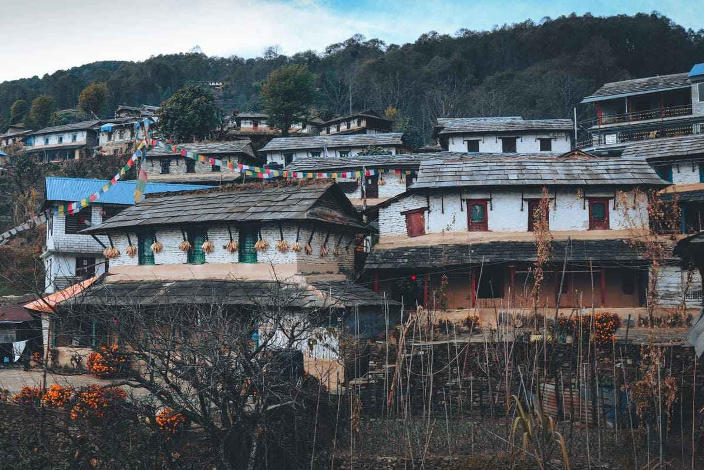
In hill and mountain regions, houses were constructed using mud and stone, which were strong, insulating, and readily available. In summer or winter, thick stone walls retained warmth or cold inside, while mud used for plastering acted as an additional insulating agent.
Such buildings normally had sloping roofs made of clay tiles or thatch, which were designed to facilitate the drainage of water, especially during the monsoon season. The simple yet effective design showed how early Nepali builders adjusted to the environment and terrain.
Wooden Homes and Newari Houses
The Newar community, especially in the Kathmandu Valley, developed some of the most artistic traditional houses in Nepal. Such houses are characterized by elaborate wooden carvings on their windows and doors, brick walls, and a multi-story structure.
Commonly three to four storeys high, traditional Newari architecture consists of a group of houses built in a cluster formation around a central courtyard, thus enabling a community lifestyle for their inhabitants. In fact, their houses not only served as a means for people to live in comfort and protection but also as a source of aesthetic and artistic expressions through their woodworks that reflect their rich art heritage
Tharu and Terai Village Houses
In the flat lands of the Terai region, the Tharus made houses to the local warm and damp environment by employing materials that would keep the houses cool and flexible in structure due to the natural properties of those materials.
These homes were raised on platforms, with tiled roofs and spacious verandas. These helped in keeping the inside of these homes well-ventilated. These homes were quite well-adapted to their environments.
Highland and Mountain Homes
In higher Nepal, residential buildings needed to resist low temperatures and snowfall. The buildings in Mustang, Manang, and other Himalayan regions consisted of stone and mud with smaller window sizes to provide warmth in cold temperatures.
Such types of houses in Nepal highlight how the builders were able to do the best they could in the conditions they faced and came up with warm, sturdy, and functional houses.
Regional Variations in Nepali Houses
Geography in Nepal, from lowlands to mountains, leads to the fact that houses greatly differ from region to region.
Terai Region Houses
Houses in the Terai region may have:
- One-storeyed buildings with open courts
- Bamboo-lattice walls and mud-plaster
- Thatched or tiled roofs
- Large verandas for ventilation
These characteristics make it beneficial in high temperature and high humidity conditions and improve living conditions in this region.
Hills and Lower Mountain Houses
In the hills:
- The stone and wood were readily available
- The home was typically two-storey tall.
- The sloped roofs helped with the rain.
A climate that could experience cold winter months and monsoon rains made residential architecture adapt for durability and warmth.
Himalayan and High Altitude Homes
In regions experiencing cold winters:
- Walls were thick
- Windows were small
- Roofs could double as storage or drying space.
These homes balanced warmth with practical space use, showing how form follows function in extreme climates.
Modern Houses in Nepal: Style and Functionality
As the Nepalese cities develop and the lifestyle becomes modernized, modern house design in Nepal are adopted. This includes Kathmandu and Pokhara, with modern house designs that meet the changing lifestyle that is being developed within these cities and Chitwan.
a) Concrete and Brick Homes
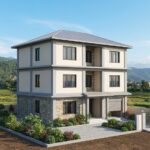
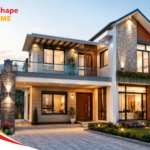
Modern house design in Nepal has been built using materials like reinforced concrete (RCC), bricks, steel, and glass. This makes them very strong. They also possess the following modern characteristics of homes:
- Flat or gently sloping roofs
- Large windows for natural lighting
- Numerous floors to optimize space usage
- Balconies and terraces
Such features result in contemporary homes being more comfortable and open than conventional housing.
b) Urban Townhouses and Apartments
The increasing price of land in cities like Kathmandu leads to a preference in families for:
- Multi-storey town
- Apartments or condominiums
These types of houses in Nepal are efficient in high‑density areas and offer modern amenities close to schools, markets, and workplaces.
c) Contemporary and Minimalist Designs
International trends have become the driving force behind contemporary designs of modern houses in Nepal.
Minimalist styles focus on:
- Clean lines
- Open floor plans
- Simple, uncluttered spaces
The large windows make it possible to illuminate the home, allowing a connection with the outdoor environment through views of the surrounding landforms.
d) Eco‑Friendly and Sustainable Homes
With the rise in environmental awareness, numerous construction professionals, as well as homeowners, are interested in learning about:
- Rainwater harvesting
- Solar Energy Systems
- Green Roofs
- Natural materials, if possible
Such designs offer modern comfort, yet they also have an element of taking care of the environment, which is important whether one lives in rural areas or in the city.
Fusion Homes: Tradition Meets Modernism
One of the interesting aspects of Nepalese architecture is that traditional elements of buildings are being combined with modern building standards. Such buildings integrate the natural elements of cultures into today’s requirements.
For example:
- A modern home might include Newari‑style carved wooden windows
- Old brick facades might be integrated into new concrete construction.
- Sloping, traditional roofs can be combined with modern interiors
This approach honors heritage while making the home safe, strong, and functional.
How Modern Designs Integrate Cultural Identity
Even in modern house design in Nepal, many Nepali owners still retain their identity in terms of:
Carved Windows and Decorative Details
With the design inspirations from the traditional patterns, modern houses may have the following:
- Decorative wooden frames
- Brick accents
- Stylistic elements from Nepali culture
This retains the essence of Nepali design even in modern homes.
Materials That Reflect Tradition
Incorporating local stone or brick in designing the exterior of a modern house can help harmoniously combine old and modern building methods in a manner that has a familiar and fresh feel.
Choosing the Right House Style in Nepal
While choosing the type of housing, the Nepalese constructors consider the following factors:
- Climate: The mountains require insulation, the plains require ventilation
- Cost: Cost-effective for traditional, but will last for a lifetime with modern buildings
- Lifestyle: Family units that include children could find the well-organized and well-structured modern house very appealing.
- Cultural Value: Some people choose designs that relate to their heritage and identity
The decision of house type entails making an optimal combination of requirements for comfort, traditional understanding, sustainability, and costs.
Why Understanding Different House Types Matters
Knowing various types of houses in Nepal has been important in many ways:
- Homeowners make better decisions before building
- Students are introduced to culture and architecture
- Builders understand how to design homes that suit local needs
This knowledge bridges the past with the present, preserving heritage while welcoming innovation.
Conclusion
Nepal’s architecture reflects the country’s rich geographical and cultural diversity. Starting from the rural area’s mud and stone houses to the modern homes found in Kathmandu, the types of houses in Nepal have stories of strength, culture, and innovation.
Traditional designs serve as an inspiration to appreciate the beauty of simplicity and living in tune with nature. Modern house designs in Nepal depict the adaptability of the people to the times. Whether old or modern, Nepal’s homes tell the story of its past and the promise of its future.
At Reshape Home, we like to think that every home, no matter how modern or vintage, has a personality of its own. Learning and appreciating this fact helps one value heritage and plan for the future.
More Services


Recent Posts
-

Common Plumbing Problems in Nepal: Causes, Safe Fixes, and When to Call a Plumber
Oct 18, 2026 | reshapehome
-
Earthquake Resistant House Design in Nepal: The Complete Homeowner’s Guide (2026)
Oct 04, 2026 | reshapehome
-
Waterproofing Cost in Nepal (2026): Price Per Sq Ft Guide
Sep 28, 2026 | reshapehome
-
False Ceiling Price in Nepal: Complete 2026 Cost Guide by Material & Room
Sep 22, 2026 | reshapehome
-
Gypsum Plaster in Nepal: The Complete Guide to Cost, Benefits, and Application
Sep 18, 2026 | reshapehome
-
House Design in Nepal: The Complete 2026 Guide
Aug 14, 2026 | reshapehome
-
Essential Guide: How to Fix Small Cracks in Basement Walls in Nepal
Aug 02, 2026 | reshapehome
-
Glass Price in Nepal 2026: Complete Guide
Jul 17, 2026 | reshapehome